

Living in Overwhelm
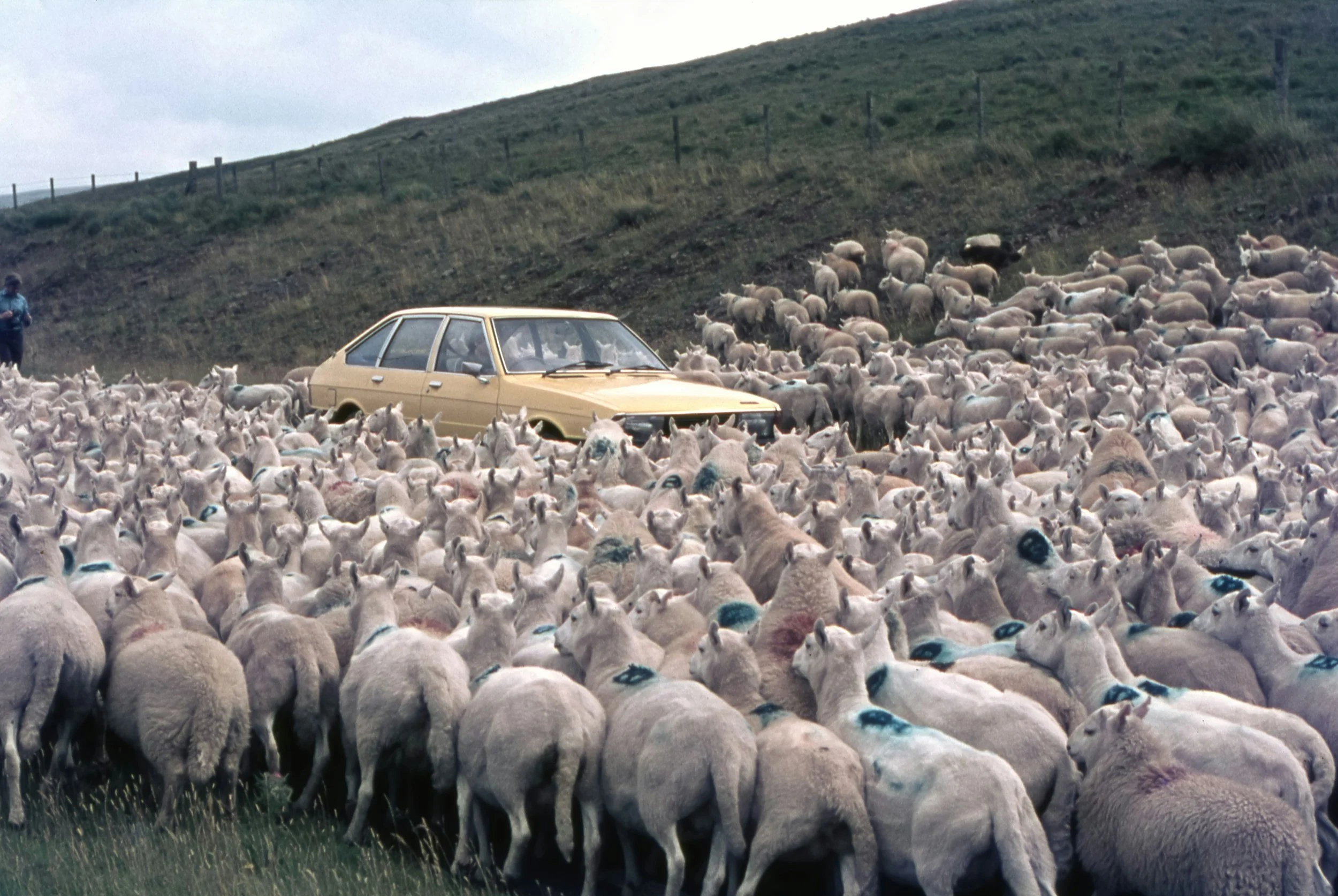
When you don’t realize you’re lost until you find your way home
Overwhelm rarely arrives like an emergency with sirens and flashing lights. It’s more like a slow weather system that moves in so quietly you don’t notice the first drop. It changes the air. It alters the light. It settles into your routines until it feels like the atmosphere of your life rather than something passing through it.
At first, you don’t call it overwhelm. You call it busy. You call it capable. You call it just a hard season, the kind you can outwork if you keep your shoulders squared and your smile in place. And if you’ve built a life around being the one who adapts, the one who endures, the one who keeps showing up even when your insides are begging for a pause, that story will hold for a while. It will even earn you praise.
This is what I learned slowly, and then all at once: surviving can look an awful lot like strength. Until the moment your body—or your grief, or your soul—tells the truth you’ve been translating into productivity. You weren’t managing. You were carrying. You were bracing. You were swallowing what hurt because there wasn’t time to feel it, and the weight became so familiar that you forgot it was heavy.
My own overwhelm didn’t begin with a packed calendar. It began with grief.
The death of someone I loved deeply split time into a before and an after. It was an overdose, the kind of loss that carries its own particular ache: shock that has nowhere to land, questions that don’t have a home, helplessness that keeps searching for a lever to pull. And underneath it all, the quiet violence of imagining the moments that will never happen now, the birthdays, the ordinary phone calls, the future that had already been forming in my mind.
When he died, I didn’t only lose him. I lost a sense of tethering to my family, too—an invisible thread that had made me feel anchored, held, connected even when things weren’t perfect. Without him, the familiar terrain of belonging shifted beneath my feet. I found myself wondering where I fit, and whether I ever truly had. Grief didn’t just take someone I loved; it rearranged the architecture of home.
At the funeral, everything we didn’t know how to say to one another rose like smoke. There was anger, and silence, and pain with nowhere to go. We were standing in the same storm, and yet somehow we were alone in it, each of us gripping what we couldn’t translate into words. I went home carrying more than loss: confusion, guilt, and a nervous system that no longer knew what safety felt like. I wanted time, time to make meaning, time to soften, time to learn how to breathe again in a world that had changed shape.
But life doesn’t pause for grief. It keeps moving, and you either move with it or you get dragged behind it. So I did what so many of us do. I kept going. I kept functioning. I kept proving, to myself and everyone watching; that I was okay.
I had recently accepted a position as the Child Fatality Coordinator for my county, a position I believed I was genuinely built for. I had years behind me as an emergency room nurse. I had witnessed tragedy. I had held families through the unthinkable. I had learned how to be calm when everything was falling apart.
In healthcare, composure is currency. You learn to compartmentalize early, because if you let yourself fully feel what you’re seeing, you won’t make it through the shift. So you become skilled at being “fine.” You become fluent in the kind of strength that never trembles. You learn to smile with a tight jaw and call it resilience.
What I quickly learned, witnessing death and witnessing a child’s life are not the same thing. Each case was a child, a family, a story. The records and reports didn’t only tell me how a child died; they revealed how that child had lived. That detail changes you. No one teaches you that empathy has weight, or that some stories don’t end when you close the file.
Those stories followed me home, into the car, on walks with Berkley, into yoga classes, into dinner, into the hours when my eyes were closed but my nervous system stayed wide awake. Slowly, it became harder to tell where my personal grief ended and the professional grief began. Everything blurred into one steady hum of vigilance, one constant readiness for the next terrible thing.
That is vicarious trauma: not a dramatic breaking point, but a slow accumulation. A layering. A saturation. A life lived in close proximity to suffering with no real space to metabolize it.
And still, I kept going. Because other people needed me. Because I believed knowledge made me protected; registered nurse, student of Ayurveda, yoga teacher, trauma-informed, trained, devoted. I had tools. I had language. I had a lifetime of competence.
What I didn’t understand yet was simple and devastating: you can be highly capable and still be profoundly overwhelmed.
Then came perimenopause, and once again I assumed I was prepared. I knew hormones. I knew nutrition and movement and nervous system care. I had spent years guiding other women back into their bodies with reverence and steadiness, teaching them to listen for the quiet wisdom under the noise.
What I didn’t know was how to offer myself that same devotion.
By spring of 2025, I looked in the mirror and didn’t recognize the woman looking back. Inflamed. Anxious. Carrying weight that had nothing to do with food. Confidence quietly gone, as if it had slipped out of the room while I was busy taking care of everyone else. I kept searching for the right protocol, the right supplement, the right way to outsmart what was happening, until it became impossible to ignore that this wasn’t simply a problem to solve. It was a message to receive.
It’s clearer to me now that overwhelm had been speaking for years, first in my life and then in my body. It spoke in tight shoulders and shallow breath, in sleep that didn’t restore, in a hypervigilance that felt normal because it had become familiar. We like to believe overwhelm lives in our calendars, as if it can be solved with better planning. But more often, it lives in the nervous system. It lives in the way you hold your jaw. It lives in the breath you forget to take. It lives in the ache behind your eyes at the end of a day you “handled.”
For a long time, I thought perimenopause was the problem. Looking back, I can see it was the messenger, my body reflecting years of unprocessed grief, chronic stress, vicarious trauma, and a lifetime of placing everyone else’s needs ahead of my own. I had become so practiced at pushing everything down that I mistook numbness for resilience.
Until I couldn’t.
When the walls finally gave way, it felt like failure at first, like I had lost whatever made me “strong.” But it wasn’t failure. It was the first honest conversation my body had been trying to have with me for years. It was the moment the performance ended and the truth stood up in the room.
It had been whispering: slow down. Rest. Grieve. Ask for help. Choose yourself. And when I finally listened, the path forward wasn’t glamorous or quick. It was quiet. It was human. It was made of small decisions that didn’t look impressive from the outside but changed everything on the inside.
For the first time, I stopped trying to fix everyone else and turned toward myself. I started therapy. I began hormone replacement therapy. I committed to the slow, uncomfortable work of self-study, not to become a better practitioner, but to understand the woman I had become beneath all the coping, all the competence, all the performing of “I’m okay.”
Healing didn’t happen because life got easier. It happened because I finally believed I was worthy of the same care I had spent my life giving away. I learned, over and over, that tending to myself wasn’t selfish, it was necessary. Not indulgence. Not weakness.
That season asked me to get quiet. I stepped away from teaching, not because I stopped loving it, but because I refused to speak about healing while I was still learning how to live it. I promised myself I wouldn’t return until I knew, honestly, the woman standing at the front of the room.
And then, about six months ago, something shifted. For the first time in years, I felt steady, not because grief disappeared and not because the world became gentler, but because I had returned to myself. I could feel my own edges again. I could hear my own voice. I could sense what was mine to hold and what was never meant to live inside my body in the first place.
With that steadiness, I came back to a seed I’d carried for a long time: Awaken the Wise Woman.
For years, I told myself I was waiting for the right time. The truth is, I was waiting for the right version of me, the version who felt “ready,” the version who had no tenderness left untended, the version who could speak without her voice shaking. But readiness, I’ve learned, isn’t the absence of tenderness. It’s the willingness to show up with tenderness in your hands and truth in your throat.
Now I’m ready to share my story with honesty instead of certainty, and to sit alongside women of every age and stage as we remember ourselves together. That is the heart of Awaken the Wise Woman. It isn’t one woman teaching another. It’s community: a place where stories are welcomed, voices are heard, and women are reminded of the wisdom they already carry.
My life looks different now. I’ve stepped into a new role supporting children and youth who have experienced abuse, and I no longer confuse compassion with limitless capacity. I know compassion is a gift, and I also know it requires tending. So I’m preparing differently, building the support I wish I’d had years ago: friends and therapists who understand what it means to hold the stories of those who hold everyone else’s stories, and space to release what I once stored in my body. That is no longer optional. It is part of my practice, and part of my responsibility to myself.
Healing has changed how I move through the world. I still offer trust carefully. The walls I built for survival are still there, but now they protect what I worked so hard to reclaim. I am a Cancer, after all. Home matters to me. Safety matters to me. Belonging matters to me. The difference is that now I know I’m responsible for creating those things within myself first.
So why am I sharing this?
Not because my story is unique, but because I know it isn’t unique. Writing these posts has given me a way to be vulnerable without the intensity of speaking face to face, and sharing with you has given me room to tell the truth in my own cadence. Thank you for being here.
There are far more women living in overwhelm than we realize, women who keep showing up for everyone while quietly abandoning themselves. Women who mistake exhaustion for resilience and productivity for worth. I know, because I was one of them. And perhaps you are too.
I think of the woman in the mirror in spring of 2025. I want to place my hands on her shoulders and tell her: you aren’t failing. You aren’t weak. You aren’t broken. You aren’t “too emotional.” You’re carrying more than one person was ever meant to carry.
And you can put it down now.
If my story offers anything, I hope it reminds you of this: you are not here to spend your life merely surviving. You are here to feel deeply, love fully, grieve honestly, and rest without guilt. Listen to your body. Trust your intuition. Protect your peace. And when life asks more of you than you have to give, remember:
You are allowed to put it down.
Because healing is not about becoming someone new. It is about coming home to the woman who has been waiting for you all along.
